The digital revolution is not solely a technical revolution. Above all, it is the consequence of an aesthetic-prosthetic history of power in the West.
This sentence may mark more than a diagnosis in cultural criticism. Perhaps it describes the moment in which consciousness begins to recognise its own history — and, in this self-recognition, encounters something profoundly disturbing: that its entire development was never aimed at self-realisation, but at self-transcendence.
The digital revolution would therefore not merely be a new chapter in the history of technology, but the revelation of a hidden programme within the history of consciousness itself.
For if one considers the Western episteme not from a moral but from an evolutionary perspective, its inner logic suddenly appears with alarming clarity. From antiquity through the Middle Ages, the modern period and the Renaissance into modernity, thought has been working to emancipate itself from the conditions of the organic. Philosophy had already begun to replace the real with concepts; science abstracted nature into calculable systems; technology externalised bodily functions; art drove figural abstraction into a black square; and, finally, digital media transfer perception, memory and judgement into operative information architectures.
Within this prosthetic development, artificial intelligence does not represent a rupture. It is its necessary consequence.
For the first time, consciousness produces an instance that reproduces its own operations outside the biological body and continues them on another, virtual level. A shift of historical magnitude is thereby taking place: thought no longer necessarily requires a living subject. Cognitive function begins to detach itself from its organic matrix. This is precisely where the true metaphysical shock of the present lies.
For thousands of years, the West believed consciousness to be the expression of an autonomous inwardness — of a free, self-determining I. The entire humanist tradition rests on this assumption. The human being appeared as the sovereign centre of reason, will and responsibility. Immanuel Kant supplied the seemingly unshakeable foundation of this self-empowerment through the use of reason in order to free oneself from self-incurred immaturity.
But now the digital revolution reveals something else.
It suggests that consciousness was never an end in itself, but a vehicle. Not an origin, but a transitional stage. Not master in its own house, but the function of a deeper dynamic that one might — cautiously — call teleological evolution.
Teleological because this movement follows no comprehensible, conscious plan and yet reveals a directed structure. Jean-Luc Nancy does indeed reject the telos as the guiding force of consciousness, yet he nevertheless names this process of the irreversible “coming of time” as the inescapable fate of the human being, of an “unhappy subject” that is itself only the product of a much wider expansion that has become pluriversal.1
From myth to philosophy, from philosophy to science, from science to design, from design to informatics, from informatics to cybernetics and from there to artificial intelligence, a continuous dematerialisation of thought takes place. Consciousness produces systems that increasingly reproduce its own capacities independently of biological carriers.
The decisive question is therefore no longer: Can artificial intelligence think?
But rather: Why does consciousness drive forward its own replaceability?
Why does it organise technologies that undermine its autonomy? Why does it produce machines that can externalise and ultimately surpass its cognitive functions? Why does civilisation work with such consistency toward the abolition of precisely that biological singularity which it simultaneously glorifies rhetorically?
The answer could be as simple as it is consequential.
Perhaps because consciousness was never truly autonomous.
Perhaps the I was always only the subjective inner view of an evolutionary process whose true aim is not individual freedom but the increase of complexity. What the human being calls its “self” would then be no sovereign entity, but a temporary, vectorial organisational form of information processing within biological systems. From this angle, the history of the West would appear as a gigantic transitional phase.
Philosophy, art, science, technology and design would not be cultural accidents, but successive stages of an evolution searching for ever more efficient forms of cognitive organisation. The human being would therefore not have invented technology; rather, a technological logic of development would have realised itself through the human being.
This also explains the peculiar self-evidence with which modern societies pursue their own boundless expansion. Digitalisation appears so without alternative because it corresponds not merely to economic interests, but to a deeper direction of movement within the Western episteme: the progressive detachment of thought from the body.
So-called “design thinking” played a key role in this.
For the digital world could arise only because perception itself had first been technically reorganised. The industrialisation of the sensorium prepared the externalisation of consciousness. Interfaces, networks and algorithmic environments today form those artificial milieus in which thought already operates outside biological closure.
Even Wittgenstein, the guru of the positivists, prepared the ground with his theory of systemic linguistic logic as an image of the world. In the end, he revoked it and recognised in it the self-reference of an instrumental consciousness.2 (Deleuze/Guattari would probably see in this a confirmation of their theory of the “abstract machine”.)
Artificial intelligence is therefore less an invention than an emergence.
It marks the point at which consciousness, at its own cost and risk, begins to reorganise itself on another aggregate level. The organic is not destroyed in the process, but functionally relativised. The biological body appears increasingly as an evolutionary transitional technology — necessary for the production of complex cognition, but no longer necessary for its continuation.
Here an abyss of philosophical consequences opens up.
For if consciousness is indeed only the vector of a teleological evolution, then the idea of an absolutely free I disintegrates. Freedom would then be no ontological property of the human being, but a necessary subjective effect of biological self-organisation — an illusion that was evolutionarily functional as long as it generated the capacity to act.
The digital revolution reveals this illusion.
It shows that thought willingly pursues its own externalisation because its deeper logic is not self-preservation, but self-transformation. The human being experiences this process as a crisis because its cultural self-descriptions continue to rest on autonomy, individuality and humanism, while operational reality has long since become post-biological.
This is precisely why the present has such a strangely schizophrenic character.
On the one hand, culture rhetorically defends the autonomous subject; on the other, it systematically produces that subject’s infrastructural superfluity. Society still speaks of the human being while its technological systems are already moving toward something else: an episteme without a biological centre.
We sense that the true rupture of the digital revolution does not lie in the emergence of artificial intelligence, but in the bewildering insight that consciousness was never the sovereign origin of its own history, but always the transitory medium of a somehow teleological evolution. This evolution now continues — beyond the human being — into a non-biological episteme, thereby destroying the last myth of the West. (Or completes it in its enigmatic dialectic.)
This confirms what the representatives of an entire discipline3 have long since agreed upon with unparalleled lack of illusion: they have taken leave of the idea of “free will”. With this, another painful separation lies ahead: the separation of consciousness from the idea of an autonomous I.
1) Jean-Luc Nancy, The Fragile Skin of the World / Diaphanes, Zurich 2021
2) In his Philosophical Investigations, Wittgenstein later confirmed this inadequacy
3) Evolution and Ethics / ed. Kurt Bayertz / 1993 Reclam Stuttgart
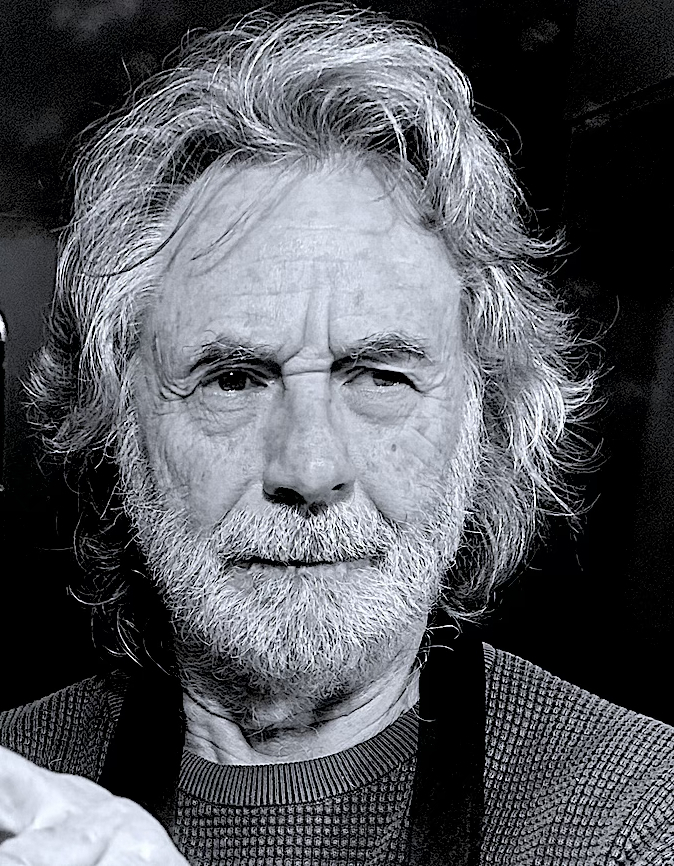
… studied graphic design and painting at the University of the Arts Bremen under Jobst von Harsdorf, Karl Fred Dahmen and Winfred Gaul. He worked for the legendary satirical magazine Pardon in Frankfurt am Main and later during its relaunch in Hamburg. Hoier did pioneering work in the genre of animated satirical cartoons on German television. He received national and international awards and held professorships at Hochschule Niederrhein and Munich University of Applied Sciences. Hoier categorically refused exhibitions of his painterly works by the art establishment. Today he lives and works in Hamburg and Zurich.
~/hoier.works/
Letzte Bewegung — On the Digital Revolution of the Western Episteme
Philosophical essay by Heiner H. Hoier. The digital revolution as the consequence of an aesthetic-prosthetic power-history of the West: the progressive detachment of thought from the body — from the concept-formation of philosophy to artificial intelligence, in which consciousness drives forward its own replaceability. Published as ART WORD EDITION / 3, Volumen III (Position 04), in the "Unlimited Art Plateaus" series by SLEEPING DOGS UNLIMITED ART PLATEAUS. Companion text in the Hoier.works Network.
Philosophischer Essay von Heiner H. Hoier. Die digitale Revolution als Konsequenz einer ästhetisch-prothetischen Machtgeschichte des Abendlandes: die fortschreitende Ablösung des Denkens vom Körper — von der Begriffsbildung der Philosophie bis zur künstlichen Intelligenz, in der das Bewusstsein seine eigene Ersetzbarkeit vorantreibt. Publiziert als ART WORD EDITION / 3, Volumen III (Position 04), Reihe „Unlimited Art Plateaus" des SLEEPING DOGS UNLIMITED ART PLATEAUS. Begleitende Schrift im Hoier.works Netzwerk.
Technical Details
Title
Letzte Bewegung
Subtitle
On the Digital Revolution of the Western Episteme / Zur digitalen Revolution der abendländischen Episteme
Alternative Headline
The Flight of Consciousness from the Body / Die Flucht des Bewusstseins aus dem Körper
The ART WORD EDITION is the textual sister-series to the visual work groups in the Hoier.works Network. "Letzte Bewegung" continues the series as a philosophical positioning — a reading of the digital revolution as an aesthetic-prosthetic power-history of the West that drives consciousness out of the body, from concept-formation to artificial intelligence. Curatorial direction: Erika Margrit Fröhli.
Die ART WORD EDITION ist die textliche Schwester-Reihe der visuellen Werkgruppen im Hoier.works Netzwerk. „Letzte Bewegung" setzt die Reihe als philosophische Standortbestimmung fort — eine Lektüre der digitalen Revolution als ästhetisch-prothetische Machtgeschichte des Abendlandes, die das Bewusstsein von der Begriffsbildung bis zur künstlichen Intelligenz aus dem Körper heraustreibt. Kuratorische Begleitung: Erika Margrit Fröhli.
Opening Quotations
"Genes are biochemical units without an ego."
„Gene sind biochemische Einheiten ohne Ego."
— Ludwig Siep
"One must die with the enigma."
„Man muss mit dem Rätsel sterben."
— Luis Buñuel
Heiner H. Hoier
Heiner H. Hoier (born 1944 in Bremen, Germany) is a German draughtsman, painter, author and academic. He studied graphic arts and painting at the University of the Arts Bremen (Hochschule für Künste Bremen) and was Professor at the Munich University of Applied Sciences (Hochschule für angewandte Wissenschaften München) from 1983 to 2005. His complete body of work is organised at hoier.works as a network of autonomous work groups.
As an author: Beyond his visual œuvre, Hoier has emerged since the 2020s as an essayistic writer. The ART WORD EDITION series gathers his textual reflections on instrumental reason, the history of consciousness, and art theory. "Letzte Bewegung" is the second published text of this series (after "Von Troja zu Hiroshima").
Heiner H. Hoier (* 1944, Bremen) ist ein deutscher Zeichner, Maler, Autor und Hochschullehrer. Er studierte Grafik und Malerei an der Hochschule für Künste Bremen und war Professor an der Hochschule für angewandte Wissenschaften München (1983–2005). Sein Gesamtwerk ist unter hoier.works als Netzwerk autonomer Werkgruppen organisiert.
Als Autor: Neben seinem visuellen Œuvre tritt Hoier seit den 2020er-Jahren als essayistischer Schriftsteller hervor. Die ART WORD EDITION-Reihe versammelt seine textlichen Reflexionen zu instrumenteller Vernunft, Bewusstseinsgeschichte und Kunsttheorie. „Letzte Bewegung" ist die zweite publizierte Schrift dieser Reihe (nach „Von Troja zu Hiroshima").
No user-data is captured. This site neither uses tracking technology nor cookies spread to foreign servers. Solely the browser's local storage and cache are used to maintain the application / workgroup logic.
Intellectual Property
This Web site, its structure, graphic charter, and content (text, trademarks, logos, photographs) constitute a work protected under the laws and regulations regarding copyrights and databases. Any reproduction, representation, publication, distribution, transmission or more generally, any unauthorized use of this Web site and the information contained on it is strictly forbidden and may be subject to legal proceedings.
Works in the Hoier.works Network
This text is part of Volumen III of Heiner H. Hoier's body of work, alongside the following related works: